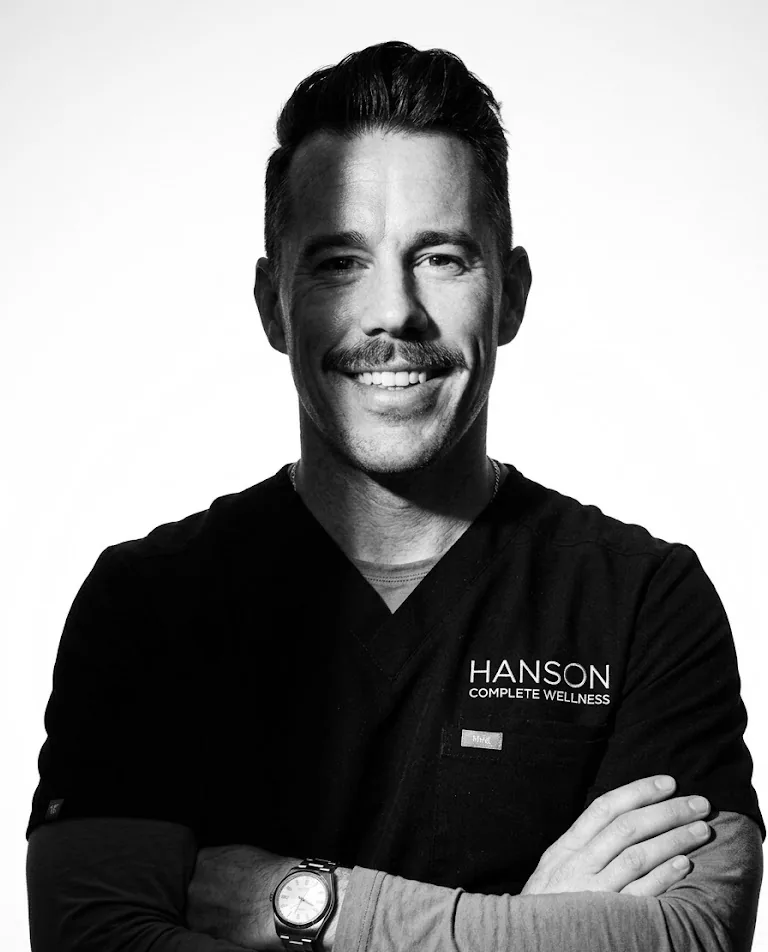
Tampa, FL · Dr. Josh Hanson, DACM
We find the pain generator before we treat it.
Chronic pain is rarely solved by guessing.
Your first visit is a hands-on Pain Mapping Visit designed to identify the muscles, tendons, ligaments, joints, nerves, fascia, scars, and trigger points that may be driving your symptoms.
Then we treat the target the same day using the right tool(s) for the tissue involved — including dry needling, acupuncture, shockwave therapy, prolotherapy, perineural injection therapy, acupotomy, and other orthopedic and regenerative techniques.
Come in confused. Leave with clarity, targeted care, and a plan.
The Problem
You have tried treatment. But has anyone mapped the pain?
Most people who come here have already tried the obvious things.
Maybe even imaging that either showed “nothing serious” or showed findings that still did not explain why they hurt.
That is frustrating. But it also points to the real problem:
You don’t need another generic treatment. You need someone to find the actual tissue generating the pain.
The Insight
Why pain keeps coming back
Pain is not always where the problem started.
- A tight muscle may be protecting an irritated joint.
- A tendon may hurt because it never rebuilt capacity after an old injury.
- A nerve may be sensitive because it is being irritated along its pathway.
- A trigger point may refer pain somewhere completely different from where the tissue problem lives.
- A ligament, joint capsule, scar, fascia, or enthesis may be the structure that keeps recreating the same symptoms.
That is why chasing pain often fails.
The painful area is not always the pain generator. And if the pain generator is missed, treatment usually gives temporary relief at best.
The Method
The Pain Mapping Method
We do not start with the tool.
We start with the exam.
Your first visit is built around a simple process:
-
STEP 01
Map the pain
We use palpation, movement testing, orthopedic assessment, trigger point evaluation, nerve sensitivity testing, and targeted tissue examination to find the structures most likely driving your symptoms.
The goal is to reproduce the familiar pain when possible — not to poke around randomly, but to identify the tissue that matches your actual complaint.
-
STEP 02
Treat the target
Once we have a working map, we choose the tool that fits the tissue.
A trigger point does not need the same treatment as an irritated nerve. A tendon does not need the same strategy as a joint capsule. A ligament injury does not need the same plan as a muscle referral pattern. The treatment depends on what we find.
Depending on your case, care may include dry needling, neurofunctional acupuncture, electroacupuncture, shockwave therapy, prolotherapy, perineural injection therapy, acupotomy, and Traumeel injection therapy.
-
STEP 03
Recheck the response
Treatment is also diagnostic. After we treat, we recheck.
- Can you move better?
- Does the familiar pain change?
- Does the tender point feel different?
- Did range of motion improve?
- Did the referral pattern reduce?
- Did the tissue respond the way we expected?
Your response helps us refine the diagnosis and build a better plan.
-
STEP 04
Build the plan
You leave with a clearer understanding of what may be driving your pain, what treatment tools make sense, and what the next steps should look like.
The goal is not random sessions with no plan — you cannot hit a fuzzy target. The goal is to give you a map and a real plan.
The First Visit
Your first visit is not just a treatment.
Your first visit is a diagnostic treatment session. It includes:
- A focused history of your pain and what you have already tried
- Hands-on examination of the likely pain-generating tissues
- Palpation and movement testing to reproduce the familiar pain
- Same-day targeted treatment when appropriate
- Immediate recheck to see what changed
- A clear plan based on what we find
You do not need to know whether you need acupuncture, dry needling, shockwave, prolotherapy, or acupotomy. That is the point of the visit.
First we map the problem.
Then we choose the tool.
Sound Familiar?
This is for you if
- You have pain that keeps coming back.
- You feel tight no matter how much you stretch.
- You have had imaging, but still do not have a clear explanation.
- You have tried treatment that helped temporarily but did not last.
- You have an old injury that never fully recovered.
- You feel like everyone keeps treating the symptom instead of finding the source.
- You want a hands-on exam, targeted treatment, and a plan that actually makes sense.
What We Treat
Conditions we commonly help with
We work with people dealing with chronic and stubborn pain, including:
- Neck pain
- Back pain
- Sciatica-like pain
- Shoulder pain
- Hip pain
- Knee pain
- Foot and ankle pain
- Plantar fasciitis
- Headaches
- Tennis & golfer’s elbow
- TMJ & jaw pain
- Tendon pain
- Sports injuries
- Nerve irritation
- Trigger point pain
- Scar-related pain
- Old injuries that keep flaring up
Pain can be simple.
But when it is not, the exam matters.
The Toolbox
The tools are only useful when the target is clear.
We use advanced orthopedic, regenerative, and acupuncture-based therapies. But the tool is not the method. The method is finding the target.
Dry needling & neurofunctional acupuncture
Used for trigger points, muscle guarding, nerve-related patterns, and neuromuscular dysfunction.
Shockwave therapy
Used for stubborn tendon, fascia, ligament, and soft tissue problems that need a stronger tissue-healing stimulus.
Prolotherapy
Used for ligament, tendon, joint, and connective tissue problems where instability or poor tissue repair may be part of the pattern.
Perineural injection therapy
Used when irritated superficial nerves may be contributing to pain, sensitivity, burning, tingling, or persistent discomfort.
Acupotomy
Used for certain chronic soft tissue restrictions, adhesions, and stubborn structural pain patterns when appropriate.
Electroacupuncture
Used to calm pain, improve movement, change muscle tone, and support nervous system regulation.
Different tissues need different tools.
That is why mapping comes first.
Why This Is Different
Most pain care starts with a protocol.
Back pain gets back treatment.
Shoulder pain gets shoulder exercises.
Knee pain gets knee therapy.
But chronic pain is often more specific than that. Two people can have the same diagnosis and need completely different treatment.
- One person’s knee pain may be tendon-driven.
- Another may be joint-line irritation.
- Another may be hip referral.
- Another may be nerve sensitivity.
- Another may be an old ligament injury.
The diagnosis names the region. The exam finds the target. That is where better care starts.
Proof
Proof belongs in the details.
Patients often come here after trying multiple treatments without a clear answer. The turning point is usually not a magic technique. It is finding the tissue that had been missed.
- The spot that recreates the pain.
- The movement that exposes the weakness.
- The nerve pathway that matches the symptoms.
- The tendon or ligament that never fully recovered.
- The trigger point referring pain somewhere else.
Once the map is clearer, the treatment becomes more precise.
- Over a decade in practice · 35,000+ procedures performed
- Florida’s most experienced dry needling practitioner
- Consulted with MLB, NFL & MLS organizations
- Owner & instructor, Micro-Acupuncture.com
- Doctor of Acupuncture & Chinese Medicine (DACM)
Not Sure?
What if you are not sure this is the right fit?
That is exactly why the first step is a Pain Mapping Visit.
You do not have to diagnose yourself.
You do not have to pick the right treatment.
You do not have to know whether your pain is coming from muscle, tendon, ligament, joint, nerve, fascia, or scar tissue.
The first visit is designed to figure out whether your pain pattern makes sense for this kind of targeted care.
If it does, we build a plan.
If it does not, we tell you that too.
Questions
Frequently asked questions
Is this just acupuncture?
Do you treat the same day?
Do I need imaging first?
What if my MRI shows a problem?
How many visits will I need?
Do you use injections?
What is acupotomy?
What should I expect after treatment?
Not Here for Pain?
Other ways Dr. Hanson can help
Trying to conceive?
Eastern Medicine fertility support for cycle health, ovulation, IVF preparation, and complex fertility cases.
Losing vision?
MicroAcupuncture programs for degenerative vision conditions — macular degeneration, retinitis pigmentosa, glaucoma, and other diseases of the retina and optic nerve.
Internal symptoms?
Pattern-based Eastern herbal medicine for digestion, inflammation, sleep, hormones, and chronic symptoms.
Your Next Step
Stop guessing where the pain is coming from.
You do not need another random treatment. You need a clearer map. Your first visit is designed to identify the pain-generating tissue, treat the target, recheck the response, and give you a plan.
Come in confused. Leave with clarity, targeted care, and a path forward.
Visit the clinic
Contact
Hanson Complete Wellness1202 W. Linebaugh Ave
Tampa, FL 33612
813-534-0311
office@hansoncomplete.com
Mon–Thu · 9:00 AM – 4:30 PM
Fri–Sun · Closed